Tag: autism

  • Let’s Talk About the Quiet Part Out Loud: The Nervous System of a Special Needs Parent

    There is a silent physiological reality many autism and special needs parents live with every single day — a nervous system that rarely gets the chance to fully rest.

    To the outside world, it may look like “stress.”
    But inside the body, it is often something much deeper:
    chronic hypervigilance, nervous system dysregulation, emotional overload, and prolonged survival mode.

    Science is finally beginning to validate what so many parents have carried quietly for years.

    Studies have consistently found that parents of children with autism experience significantly higher levels of stress, anxiety, depression, and nervous system dysregulation than parents of neurotypical children. Researchers studying cortisol — the body’s primary stress hormone — discovered that many mothers of autistic children show stress patterns similar to individuals exposed to chronic traumatic stress.

    In chronic stress, the nervous system can become trapped in a cycle of: hyper-alertness, emotional exhaustion, disrupted sleep, anxiety, physical inflammation, burnout, emotional numbness…

    This happens because the body was never designed to stay “on” indefinitely.

    Yet special needs parents often do.

    They become experts in anticipating meltdowns, decoding behaviors, fighting for services, navigating therapies, advocating at schools, monitoring safety concerns, managing sensory triggers, and preparing for worst-case scenarios before the day even begins.

    Their nervous systems adapt to survive uncertainty.

    And over time, survival becomes their baseline.

    But one of the least talked about realities is what happens as our children grow older.

    Because while there is often more support for younger children, many families discover that services begin disappearing as children enter the pre-teen and teenage years.

    And suddenly, parents are left asking:
    Where do our children belong?

    There are little to no inclusive daycare options for older autistic children and teens.
    Summer camps are limited, unaffordable, or unable to accommodate complex needs.
    Extracurricular activities often lack trained staff or true inclusion.
    Social opportunities become fewer and farther between.

    While other families may gain independence as their children grow older, many autism and special needs parents experience the opposite.

    The caregiving intensifies.

    The supervision deepens.

    The fears become heavier.

    Because now we are not only managing therapies and school meetings — we are trying to help our children build identity, confidence, purpose, and belonging in a world that was not designed with them in mind.

    How do we help them discover joy?
    Friendship?
    Independence?
    Purpose?

    How do we create opportunities that barely exist?

    And while carrying all of this emotionally, families are simultaneously balancing, the day-to-day operations of a household, the emotional needs of other children, financial pressure, care giving exhaustion, transportation, appointments, therapies,rising costs of everyday life,etc.

    Then comes the question so many parents silently carry:

    How are we supposed to earn an income on top of it all?

    Traditional employment often does not account for the unpredictability of special needs parenting:
    -the emergency school pickups,
    -the sleepless nights,
    -the therapies during work hours,
    -the constant advocacy,
    -the burnout,
    -the lack of reliable respite care.

    Many parents are forced into impossible choices:
    career or caregiving,
    income or presence,
    survival or stability.

    Some leave careers they worked years to build.
    Others attempt to work late into the night after caregiving responsibilities finally quiet down.
    Many live in a constant cycle of guilt — feeling torn between providing financially and being emotionally available.

    And beneath all of it lives another layer of nervous system exhaustion:
    the mental load.

    The endless planning.
    The remembering.
    The anticipating.
    The preparing.
    The worrying about the future.

    Who will care for our children one day?
    Will they be accepted?
    Will they have community?
    Will they ever truly belong?

    This is the invisible labor few people see.

    And yet despite carrying a level of responsibility that would overwhelm most nervous systems, these parents continue showing up every single day.

    They create magic out of limitation.
    They build routines out of chaos.
    They celebrate milestones others may overlook.
    They become safe places for children navigating a world that often misunderstands them.

    Science may explain the biological impact of chronic caregiving stress — but it cannot fully measure the depth of a parent’s resilience.

    Because even in exhaustion, love continues.

    And maybe that is the most extraordinary thing of all.
  • Grateful, Inspired, and Completely Mind-Blown: My Experience at the Autism Health Summit

    Grateful, Inspired, and Completely Mind-Blown: My Experience at the Autism Health Summit

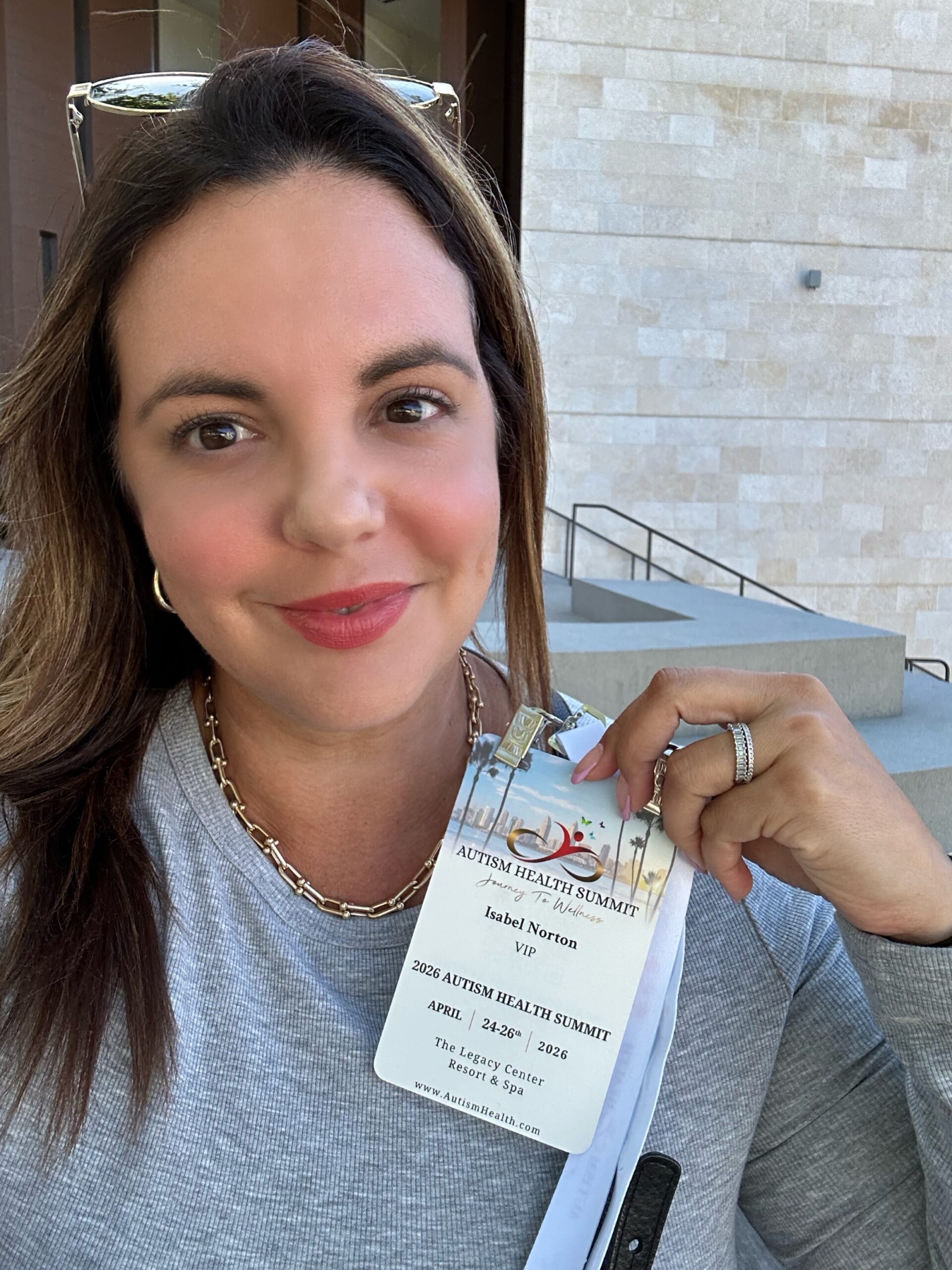
    Last week, I had the opportunity to attend the Autism Health Summit in San Diego—and I’m still trying to put into words what the experience meant to me.

    The best way I can describe it is this: I walked in hopeful… and walked out completely mind-blown.

    But more than anything, I left feeling deeply grateful.

    Grateful for access.
    Grateful for knowledge.
    Grateful to be in a room filled with people who truly get it.

    As a parent navigating the world of autism—especially with a nonverbal child—so much of the journey can feel isolating. You spend countless hours researching, advocating, questioning, and trying to piece together what’s best for your child. And often, it feels like you’re doing it alone.

    This summit reminded me that we are not alone.

    There were parents, practitioners, researchers, and advocates all in one place, sharing information that felt not only powerful—but empowering. I found myself constantly thinking, “Why isn’t everyone hearing this?”

    The amount of knowledge I was exposed to in just a few days was overwhelming in the best way possible. From communication strategies and emerging therapies to deeper conversations about whole-body health, regulation, and individualized care—it opened my eyes to possibilities I hadn’t even considered before.

    There were moments I had to just pause and take it all in.

    Moments where things clicked.

    Moments where I felt hope expand in a way I didn’t expect.

    And if I’m being honest, there were also moments where I felt a little frustrated—realizing how much information isn’t always readily accessible to families who need it most. But even that feeling has shifted into motivation. Because now that I’ve seen what’s possible, I feel an even stronger pull to share, to connect, and to help other parents access these tools and insights.

    That’s the real takeaway for me.

    This wasn’t just an event. It was a turning point.

    It reminded me that there is always more to learn, more to explore, and more ways to support our children beyond what we may have originally been told or shown. It reinforced the importance of staying curious, asking questions, and advocating fiercely—but also staying open.

    Open to new ideas.
    Open to different approaches.
    Open to hope.

    I left San Diego not just with notes and resources—but with a renewed sense of purpose.

    A desire to take what I’ve learned and turn it into something meaningful for other families walking a similar path.

    Because access to this kind of information shouldn’t feel rare or out of reach.

    It should be shared.

    And I intend to do exactly that.

    If there’s one thing I carry with me from this experience, it’s this:

    We are more powerful, more connected, and more capable than we sometimes realize.

    And when we come together—when knowledge is shared openly and generously—it has the power to change everything.

    I’m incredibly thankful I got to be part of it.

    And this is just the beginning.–

  • Back to School Tips and Advice for Parents of Non-Verbal Autistic Children!

    Back to School Tips and Advice for Parents of Non-Verbal Autistic Children!

    School is Back in Session!  

    For most of us, the school year is among us! Let’s be honest because I know the feeling. If you are anything like our family with an autistic, non-verbal child you may be feeling a mixture of relief and apprehension. Summer was very challenging due to the disruption of routine and inconsistency of specialized services like camps and therapies. However, the return to school has been a beacon of hope, offering structure, consistency, and the chance for our Robert to thrive in a supportive environment.  

    For us routines are crucial! The predictability and structure that routines provide really help reduce anxiety and make transitions smoother. The week before school started, we began reintroducing school-related routines at home. Here is what worked for us: 

    • Morning Routines: Set a consistent wake-up time, practice getting dressed, and eat breakfast at the same time each day. 
    • Evening Routines: Reinstated bedtime routines, such as setting out clothes for the next day, winding down with a calming activity, and having a consistent bedtime. 
    • Practice School Activities: We participated in the school’s open house; we practiced what the drop off would look like in the morning or simulated classroom activities to help your child feel more comfortable. 

    Before the school year began, I personally reached out to the teachers, aides, and any relevant staff to discuss Robert’s specific needs. Shared any insights about what worked well last year and what didn’t. Some of which included: 

    • Communication Preferences: Robert has a communication device, two sign languages symbols, he points and gestures. This was the staff is familiar with his communication preferences. 
    • Sensory Needs: Discussed that Robert enjoys playing with water, so he will likely stop at every water fountain. He likes putting objects in his mouth, so cleanliness is important. 
    • Behavioral Strategies: Shared effective strategies to help manage behaviors that might arise due to anxiety, frustration, or overstimulation. 
    • Comfort Items: Allow your child to bring a familiar item from home, such as a favorite toy or a piece of clothing, to provide comfort during the school day. 

    The first few weeks of school might come with challenges but staying involved and patient will make a significant difference. Keep in regular contact with your child’s teachers, celebrate small successes, and be gentle with yourself and your child as you both adjust. After school, having a consistent way to check in with your child is super helpful. Whether through a communication device, visual aids, or simply observing their behavior. Try to keep track of your child’s progress and communicate regularly with teachers to ensure they’re receiving the support they need. 

    Conclusion 

    Returning to school after a long summer can be a daunting transition or a reprieve from what I considered chaos and inconsistency. But with preparation, communication, and a focus on routines, you can help your non-verbal autistic child not only adjust but thrive. Remember, you’re not alone on this journey even though it feels like we are, lean on your family, friends and the school staff to ensure a smooth and successful start to the school year. Wishing everyone a year filled with growth, learning, smooth transitions and joyful routines! 

  • Celebrating World Autism Awareness Day: Empowering Non-Verbal Autistic Children Through Communication

    Celebrating World Autism Awareness Day: Empowering Non-Verbal Autistic Children Through Communication

    April 2nd marks World Autism Awareness Day, a day dedicated to raising awareness and fostering understanding of autism spectrum disorder (ASD). At Give Kids A Voice, we join this global initiative by spotlighting the significance of empowering non-verbal autistic children. Our focus is on how Augmentative and Alternative Communication (AAC) devices can transform their lives by offering them a voice.

    Empowering Communication:

    For non-verbal children on the autism spectrum, AAC devices provided by Give Kids A Voice are more than just tools; they are keys to unlocking a world of expression. These devices enable children to communicate their needs, thoughts, and feelings, fostering a deeper connection with the world around them.

    Inclusivity Through Technology:

    Our commitment to inclusivity drives us to ensure that every child has access to the technology they need to thrive. On World Autism Awareness Day, we reaffirm our pledge to bridge communication gaps and advocate for the rights of individuals with autism.

    Celebrating Together:

    Today, let’s celebrate the achievements and strides made in understanding autism. Let’s commit to creating an environment that supports growth, learning, and acceptance for every child.

    Conclusion:

    World Autism Awareness Day is not just a day of advocacy; it’s a reminder of the ongoing journey towards a more inclusive society. By empowering non-verbal autistic children with the tools they need to communicate, we give them the gift of voice and the ability to connect deeply with others.

  • Breaking Barriers: Celebrating AAC Awareness Month

    Breaking Barriers: Celebrating AAC Awareness Month

    Communication is an integral part of human interaction, a bridge that connects us to the world around us. But for those with speech and communication disabilities, this bridge can be filled with challenges. Augmentative and Alternative Communication (AAC) is a field that empowers individuals with disabilities to express themselves, fostering independence and inclusion. October is AAC Awareness Month, a time to celebrate the power of AAC and raise awareness about the importance of accessible communication for all. In today’s blog post, we will explore what AAC is, its significance, and how we can support and advocate for AAC users.

    Understanding AAC:

    AAC, or Augmentative and Alternative Communication, encompasses a wide range of communication methods and tools that support individuals who have difficulty with speech or language. These tools can be low-tech, like picture boards or sign language, or high-tech, such as speech-generating devices and communication apps. The goal of AAC is to provide a means for individuals to express themselves effectively, regardless of their communication challenges.

    Significance of AAC:

    1-Inclusive Communication: AAC empowers individuals with disabilities to participate in conversations, share their thoughts and feelings, and engage with their peers, family, and society in general. It bridges the communication gap, promoting inclusivity and social connections.

    2-Independence and Autonomy: AAC enables individuals to make choices, express needs/wants and make decisions independently. It promotes a sense of self-determination and autonomy, allowing AAC users to have more control over their lives.

    3-Educational Advancement: AAC plays a crucial role in education, allowing students with communication disabilities to access the curriculum and interact with their teachers and peers. It opens doors to learning and academic success.

    4-Career Opportunities: For adults, AAC can be a key factor in obtaining and maintaining employment. It ensures that individuals with communication disabilities have the tools they need to excel in the workplace.

    Supporting AAC Users:

    1-Awareness and Education: Educate yourself and others about AAC. Understand the different methods and devices available and how they work. Share this knowledge with your community to create a more inclusive environment.

    2-Respect and Patience: Communicating with AAC users may take more time and effort. Be patient, and respect their communication choices. Avoid making assumptions or finishing their sentences. Let them have their own voice.

    3-Promote Accessibility: Advocate for AAC accessibility in public spaces, schools, and workplaces. Ensure that AAC users have the support they need to communicate effectively.

    4-Empower AAC Users: Encourage AAC users to express themselves and participate in decision-making processes. Treat them as individuals with unique thoughts, feelings, and desires.

    Conclusion:

    AAC Awareness Month is a time to celebrate the achievements and contributions of AAC users while recognizing the importance of accessible communication for all. By understanding the significance of AAC and supporting AAC users, we can break down communication barriers and create a more inclusive society. Let’s work together to ensure that everyone has the opportunity to be heard and understood, regardless of their communication abilities. Please continue to help us give kids a voice.