
Free communication devices for non-verbal autistic children
Every child has something to say. Help us give them a voice.
Give Kids A Voice puts a free communication device in the hands of children who cannot speak, so they can tell the people who love them what they need, what they think and how they feel.
We have fewer than 25 devices left. Giving Tuesday is December 1st. Donate today and help us continue our mission.
Giving Tuesday starts in
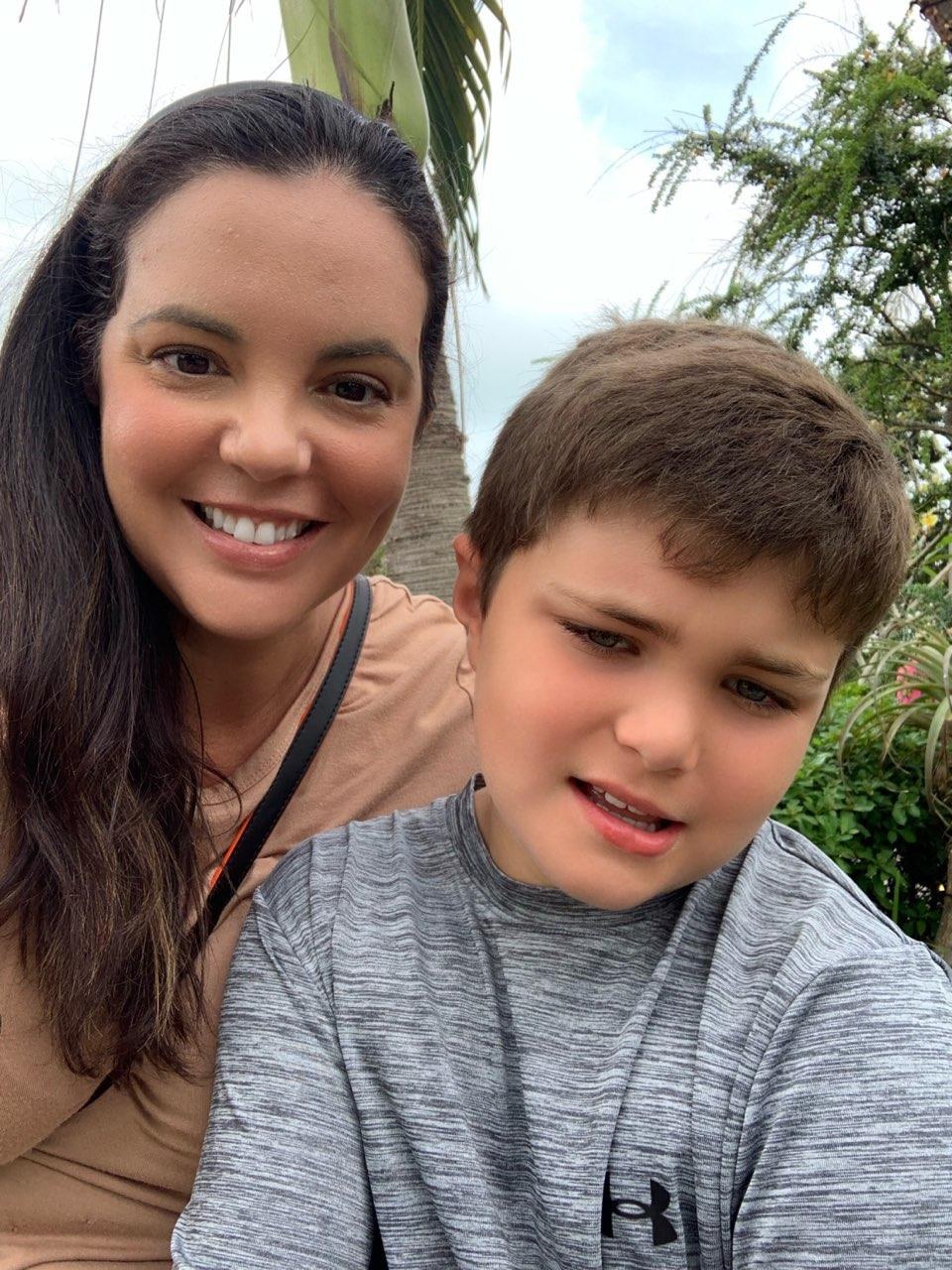
Robert and his mom, Isabel.
Nearly 200
devices already in the hands of children, caregivers and teachers
$100
covers one device: sourcing, app updates, setup, packaging and shipping
Urgent need
We have fewer than 25 devices left. Donate to replenish our supply so more children can be heard.
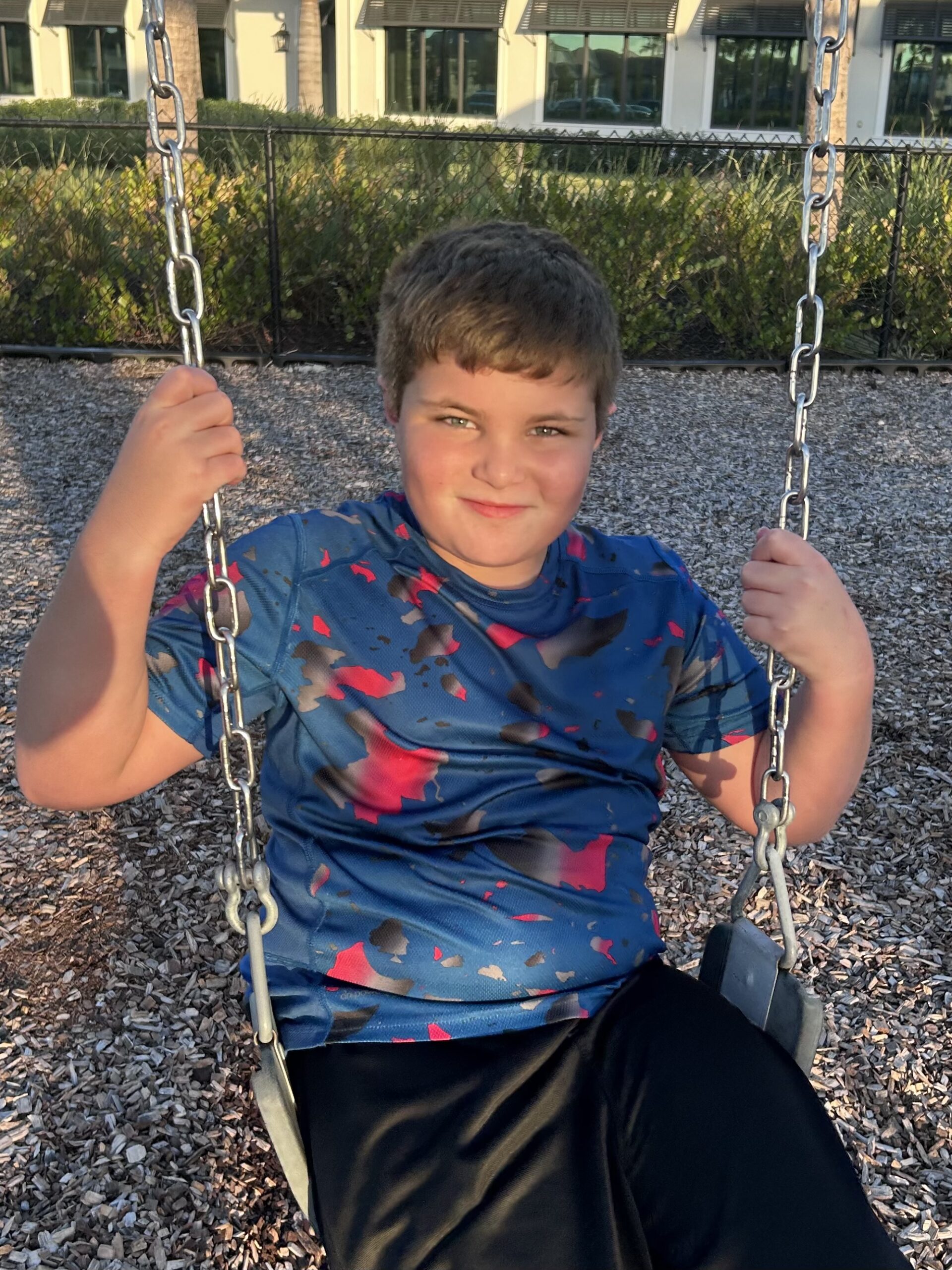
Meet Robert
Robert James Norton was born in June 2013. He loves water, he loves to play, and he has been in speech therapy since he was 18 months old. At three he was diagnosed with autism, and he is non-verbal.
Robert has plenty to say. His voice has always been there; it just needed a way out. Communication is the way we connect with the world, and without it a child can feel very alone in a room full of people who love him.
In 2021, Robert’s mom, Isabel Norton, and Mark Little started this nonprofit so that other families would not have to wait for a way to hear their child. Everyone here is a volunteer. 100% of your generous donation goes towards our mission.
Every child is on a spectrum of their own
“If you’ve met one child with autism, you’ve met ONE child with autism.”
That saying is common in the autism community, and it is true. Every child is unique and special in their own way. Some children speak. Some, like Robert, are almost completely non-verbal.
Robert’s family knows his life may not look like the one most of us expect. A first dance, a first love, a wedding, holding a child of his own: milestones many of us take for granted may never come for him.
Without people like us, and the families who stand with us, children like Robert risk being left alone, confused and overlooked, shut out of the world they deserve to be part of. A voice is how they get in.
The need is bigger than most people know
Autism is common, and the children who cannot speak are often the ones with the fewest options. When school ends, the support often ends with it, and parents and caregivers are left to carry the load alone, sometimes for decades. A communication device that keeps working, and grows up with the child, matters most then.
1 in 31
US 8-year-olds identified with autism
CDC surveillance data, children born in 2014.
25–30%
of autistic children are minimally verbal, using fewer than 30 words
Cochrane review of communication interventions.
47 months
median age of a child’s first autism diagnosis, nearly four years old
CDC, same report. Only half of children are evaluated by age 3.
66% → 10%
receiving speech-language therapy at 17, versus after high school
Drexel Autism Outcomes Project, 2015 (NLTS-2).
Sources: CDC MMWR Surveillance Summaries, vol. 74 no. 2 · Cochrane review CD012324 · Drexel Autism Outcomes Project, The Services Cliff
An app that grows up with your child
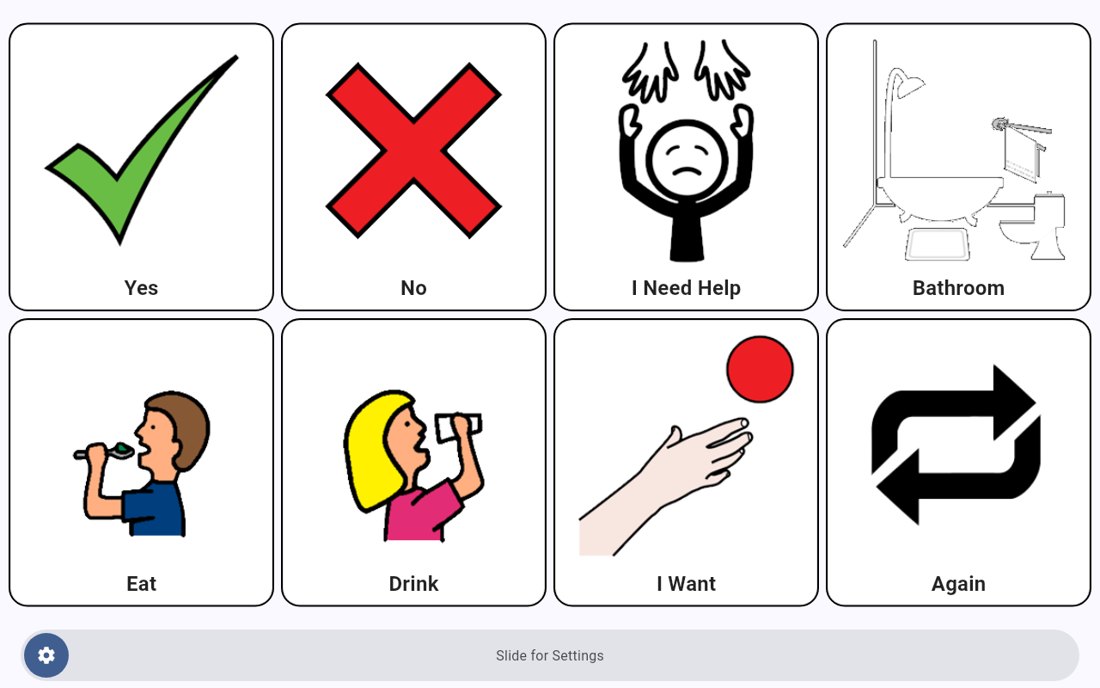
A child’s needs change as they grow, and so does our app. Parents and caregivers choose the stage that fits their child today, and move up when the child is ready. The cards stay familiar the whole way, so nothing has to be relearned.
Stage 1: Start simple
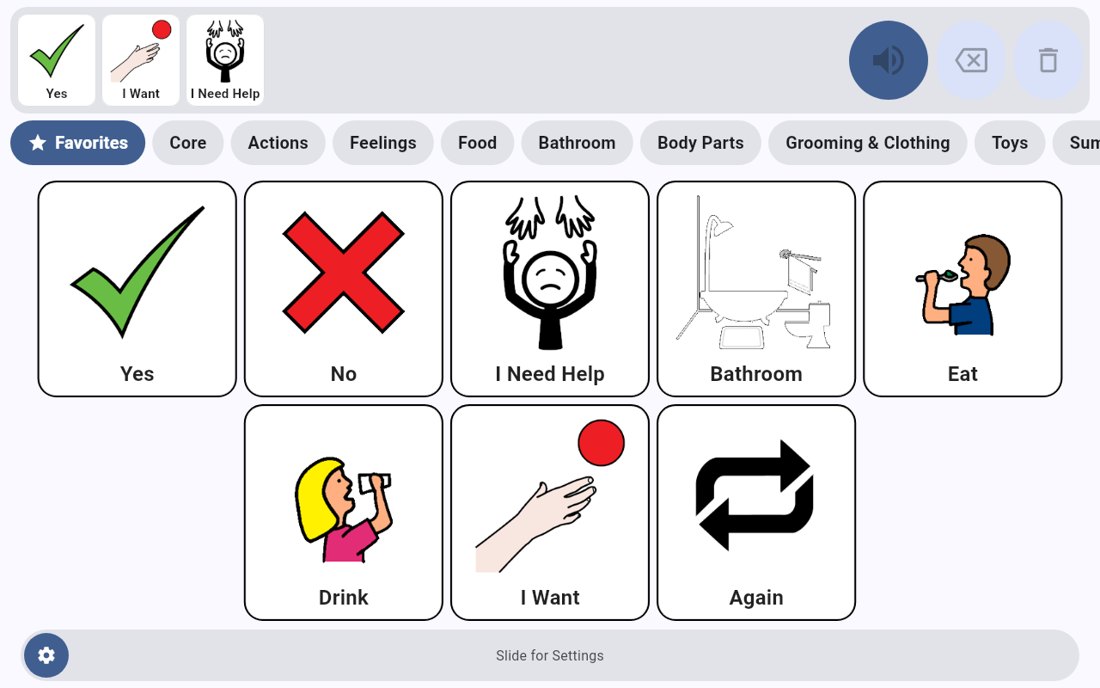
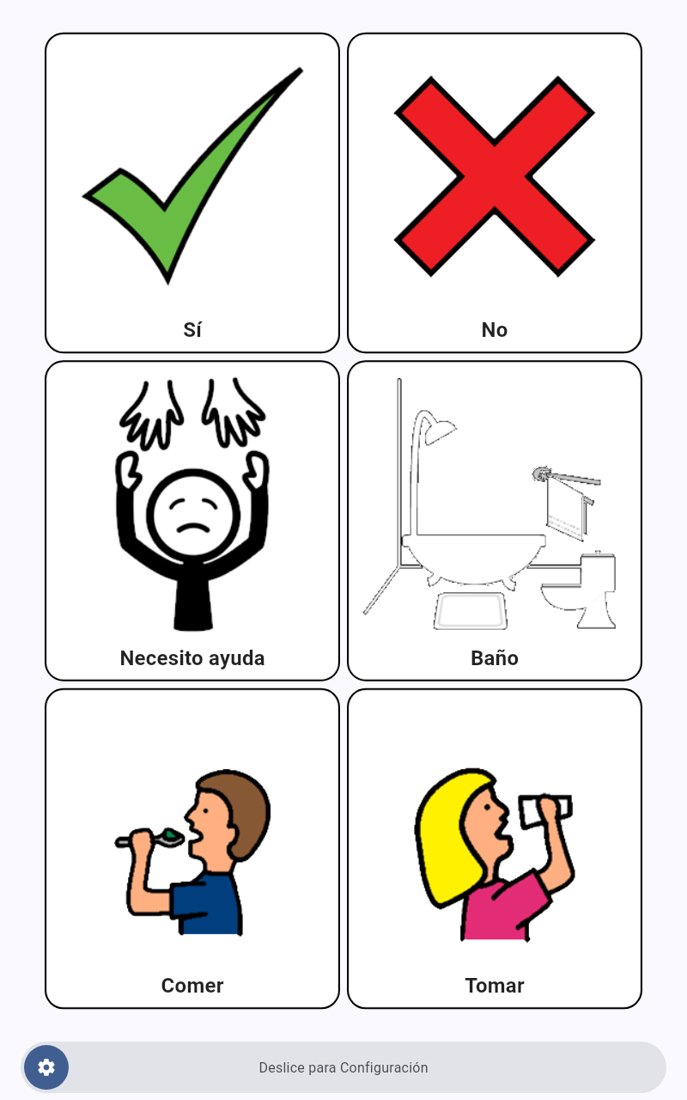
A few big, clear picture buttons. Touch a card and the device says the word out loud.
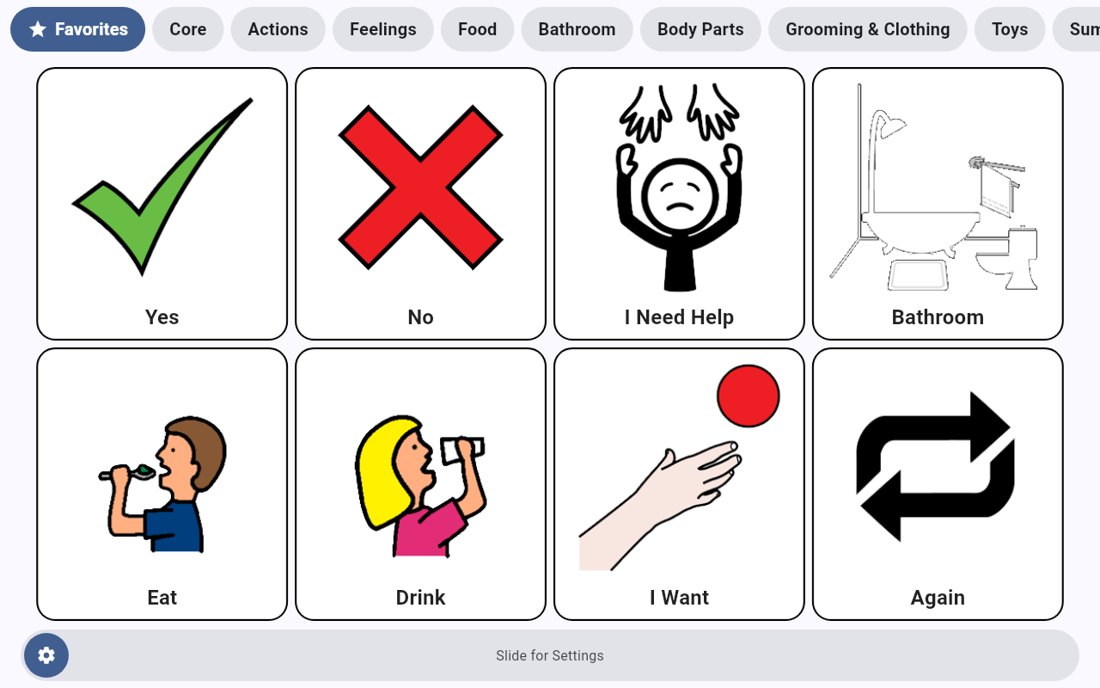
Stage 2: Favorites and categories
A Favorites home screen holds the words your child uses most, with categories like Food, Feelings and Toys a swipe away.
Stage 3: Build sentences
A sentence bar lets your child chain cards together, like “yes, I want, I need help,” and the device lets your child’s inner voice be heard.
Made for your family
- English and Spanish voices and labels
- Add your own picture cards: a grandparent, a favorite snack, the family dog
- Big buttons you can resize for your child’s hands
- Free forever. No ads, no subscriptions, no word prediction to get in the way
- Your child can talk without an internet connection
How a family gets a device
1
Tell us about your child
Send a short request. It takes a few minutes.
2
We get to know your family
We talk with you so we understand your child’s needs, including therapy and diagnosis.
3
We ship it ready to use
The device arrives set up, packaged and paid for. There is no cost to the family.
Giving Tuesday is December 1st.
We are down to fewer than 25 devices. $100 gives one child a way to say “I love you,” “I’m hungry,” or “play with me.”